Source: Civitatis · checked on 19 October 2026. Subject to change. Affiliate link.
START HERE
Paris isn't a checklist. Discover it.
The essentials in Paris are the Louvre, the Eiffel Tower, Notre-Dame, Sainte-Chapelle and the Musée d'Orsay. The Louvre needs a booked time slot, and the tower, Sainte-Chapelle and Orsay are worth reserving. Entry to Notre-Dame is free, and Montmartre and the Canal Saint-Martin cost nothing to walk.
Paris is a city where the big visits book up and the walking is free. The Louvre requires a time slot for everyone, including visitors who qualify for free entry. The Eiffel Tower, Sainte-Chapelle and the Musée d'Orsay are not mandatory to book, but queues are real, and a ticket for a set time saves you from waiting outside. Notre-Dame reopened in December 2024 and entry is free, with an optional free time slot that shortens the wait.
Walking is the other half of Paris. Montmartre and the Canal Saint-Martin cost nothing and show two very different sides of the city, one on a hill and one along the water. Do not try to see all the museums in a few days. Choose one or two, give them a full morning each, and use the afternoons for the streets of the Marais, Saint-Germain or the canal. A crowded museum is more tiring than a long walk.
Bella Visita editorial team · Sources and editorial guidance: 19 October 2026
THE BEAUTY, ONE PLACE AT A TIME
What's worth the visit.
7 selected places
01 Ticket neededTimed booking required
Louvre Museum
One of the world's largest art museums, in a former royal palace. A time slot must be booked, even for visitors entitled to free entry.
The Louvre was a royal palace before it became a museum, and the glass pyramid in the courtyard is now the main entrance. Its collections run from ancient Egypt and Greece to European painting, with the Mona Lisa, the Venus de Milo and the Winged Victory of Samothrace among the best known. A time slot must be booked, including by visitors who are entitled to free entry. It is too large for one visit, so choose a section and leave the rest.
The choice, in practice. Pick two or three works or one wing. Trying to see everything leaves you exhausted.
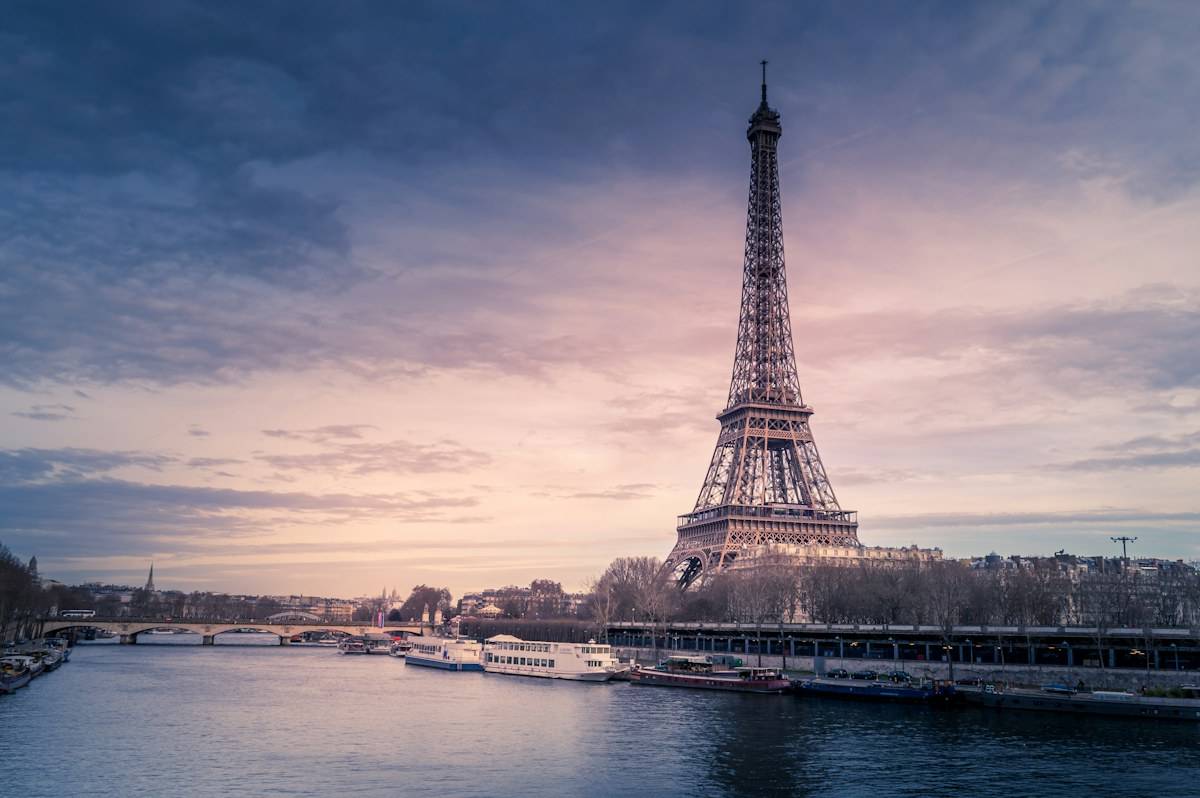
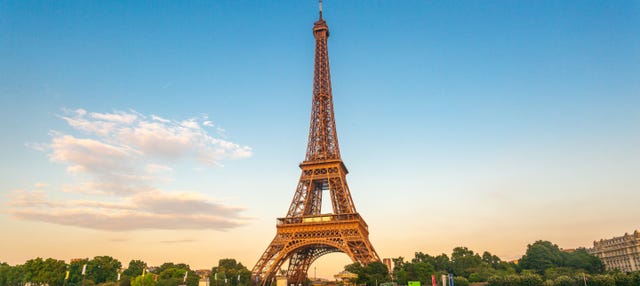
The wrought-iron tower on the Champ de Mars. Choose lift or stairs, and whether the summit is included.
Gustave Eiffel's company built this tower for the 1889 World's Fair, and it has dominated the skyline ever since. You can look at it for free from the Champ de Mars or from the Trocadéro across the river. Going up needs a ticket. Choose between the lift and the stairs, and check whether the summit is included, because the options differ and the official site spells out each one. Book ahead for the date you want.
The choice, in practice. Compare the lift and stairs options on the official site before you pay.
The Gothic cathedral on the Île de la Cité, reopened in December 2024. Entry is free; an optional free time slot reduces queueing.
Notre-Dame reopened in December 2024 after the fire of 2019. Entry to the cathedral is free, and visitors can reserve an optional free time slot to cut the queue. Inside, the restored stonework is pale and bright, and the vaulted nave rises above you. The square outside gives the best view of the facade and its twin towers. Check the official site for the current rules on entering and for anything that needs a separate ticket.
The choice, in practice. Reserve the free time slot if you can. It makes the queue much shorter.
A thirteenth-century royal chapel on the Île de la Cité, famous for its stained glass. Booking ahead is advised.
Louis IX built this chapel in the thirteenth century to house relics, including what was believed to be the Crown of Thorns. The upper chapel is a narrow room whose walls are almost entirely stained glass. On a bright day the colours cover the floor. It is small, and a security check at the entrance can make the queue slow, so booking ahead is advised. Plan a short visit, then walk to Notre-Dame, which is a few minutes away.
The choice, in practice. Visit on a bright day for the full effect of the glass.
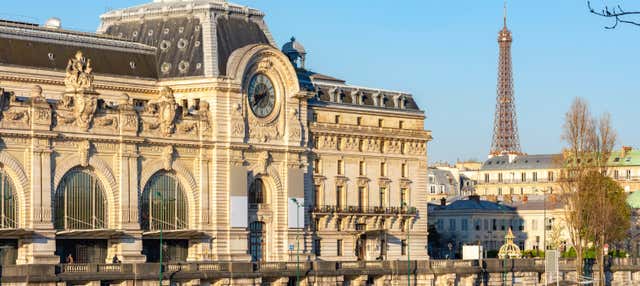
A former railway station that now holds the great Impressionist collection. Booking ahead is advised.
The museum fills the old Gare d'Orsay, a station built for the 1900 Exposition, and the main hall still has its vaulted iron-and-glass roof. The collection covers French art from about the mid-nineteenth century to the early twentieth, with Monet, Renoir, Degas, Cézanne and Van Gogh well represented. It is easier to handle than the Louvre. Book a ticket ahead and head straight to the Impressionist galleries on the upper floor.
The choice, in practice. Go to the top-floor galleries first, before the crowds build up downstairs.
The hilltop district of steep streets, Sacré-Cœur and artists' squares. Free to walk.
Montmartre rises above northern Paris in a mix of stairs, cobbled lanes and small squares. Sacré-Cœur sits at the top, with a wide terrace that looks out over the city. Place du Tertre still has painters at easels, and the quieter lanes behind it hold a small vineyard and old houses. Everything here is free to walk. Expect steps, either up the stairs or by funicular, and expect the streets near the basilica to be busy.
The choice, in practice. Walk the back streets, away from Place du Tertre, to see the less crowded side.
A nineteenth-century canal with iron footbridges and locks. Free to walk.
The Canal Saint-Martin runs through the 10th arrondissement with a series of locks, small iron footbridges and shaded banks. It is where Parisians sit with a coffee or a drink on a fine day. The walk is free and flat, and it is a contrast to the crowded central museums. Cafes line the water in places, and the lock gates sometimes open to let boats through, which draws a small crowd.
The choice, in practice. Walk it in the late afternoon, when locals gather along the banks.
Not just monuments. Three ways into its character.
01 / ANOTHER VIEW
Le Marais
A district of narrow streets and old mansions, with the arcaded Place des Vosges at its heart. Museums, boutiques and the traditional Jewish quarter around Rue des Rosiers share the same few blocks. It is easy to walk, and an afternoon of browsing fills quickly.
Beyond the basilica and the main square, the area around Rue des Abbesses and the streets heading down the hill is less crowded. Small shops, bakeries and cafes sit between stairways. It rewards a slow walk if you leave the crowds near Sacré-Cœur.
A left-bank district known for its literary cafes and its old abbey church, one of the oldest in Paris. Bookshops and galleries fill the side streets, and the Luxembourg Gardens are a short walk away. A fine afternoon walk after the Orsay.
Notre-Dame de Paris, Montmartre, Canal Saint-Martin. Walks don't include the interiors of attractions.
Choose your entry.
Louvre Museum, Eiffel Tower, Sainte-Chapelle, Musée d'Orsay. Check the date, the time and the areas included in the option you choose.
Give places context.
A guide can make the difference if you want to connect what you see to history. Compare language and inclusions before booking.
A detail that helps. Book the Louvre time slot first and arrange everything else around it. Even visitors entitled to free entry need a slot.
Choose lift or stairs, and summit or second floor, when you buy Eiffel Tower tickets. The official site lists each option.
Reserve the free time slot at Notre-Dame if you can. It reduces queueing on arrival.
Split your days: a museum in the morning, a neighborhood walk in the afternoon. Two museums in one day is tiring.
QUESTIONS TO ASK FIRST
Inside Paris, with a clear head.
What should I book in advance in Paris?+
Book a time slot at the Louvre, which is required. Reserve the Eiffel Tower, Sainte-Chapelle and the Musée d'Orsay too, since queues are long. Notre-Dame is free to enter, with an optional free time slot. Montmartre and the Canal Saint-Martin need nothing.
Is Notre-Dame free to enter?+
Yes. Entry to the cathedral is free, and since it reopened in December 2024 there is an optional free time-slot booking that shortens the wait. Check the official website for current rules and for anything that has its own ticket.
Can I visit the Louvre without a guide?+
Yes. You can go round on your own with a ticket and a booked time slot. A guided tour helps you cover the highlights and avoid getting lost. Tours run in several languages, so check the language on the listing.
Do I need to book the Eiffel Tower?+
It is advisable. Queues for the lift and stairs can be long, and a ticket for a set time saves waiting. Decide between the lift and the stairs and check whether the summit is included before you buy on the official site.
Are Montmartre and the Canal Saint-Martin free?+
Yes. Both are free to walk. Montmartre is hilly with many steps, so wear comfortable shoes, and some attractions on the hill have their own tickets. The canal is flat and easy, and no booking is needed.
CURIOSITY DESERVES CLEAR SOURCES
Where the information comes from.
Each place links to its own source. The text separates editorial guidance from conditions to reconfirm for your date.