Source: Civitatis · checked on 19 October 2026. Subject to change. Affiliate link.
START HERE
Marrakech isn't a checklist. Discover it.
Marrakech starts with the medina and Jemaa el-Fna, then Bahia Palace, Ben Youssef Madrasa and Jardin Majorelle. The square and the streets are free to walk, and the palace and madrasa sell tickets at the door. Majorelle needs an online ticket for a time slot, and a licensed guide helps in the medina.
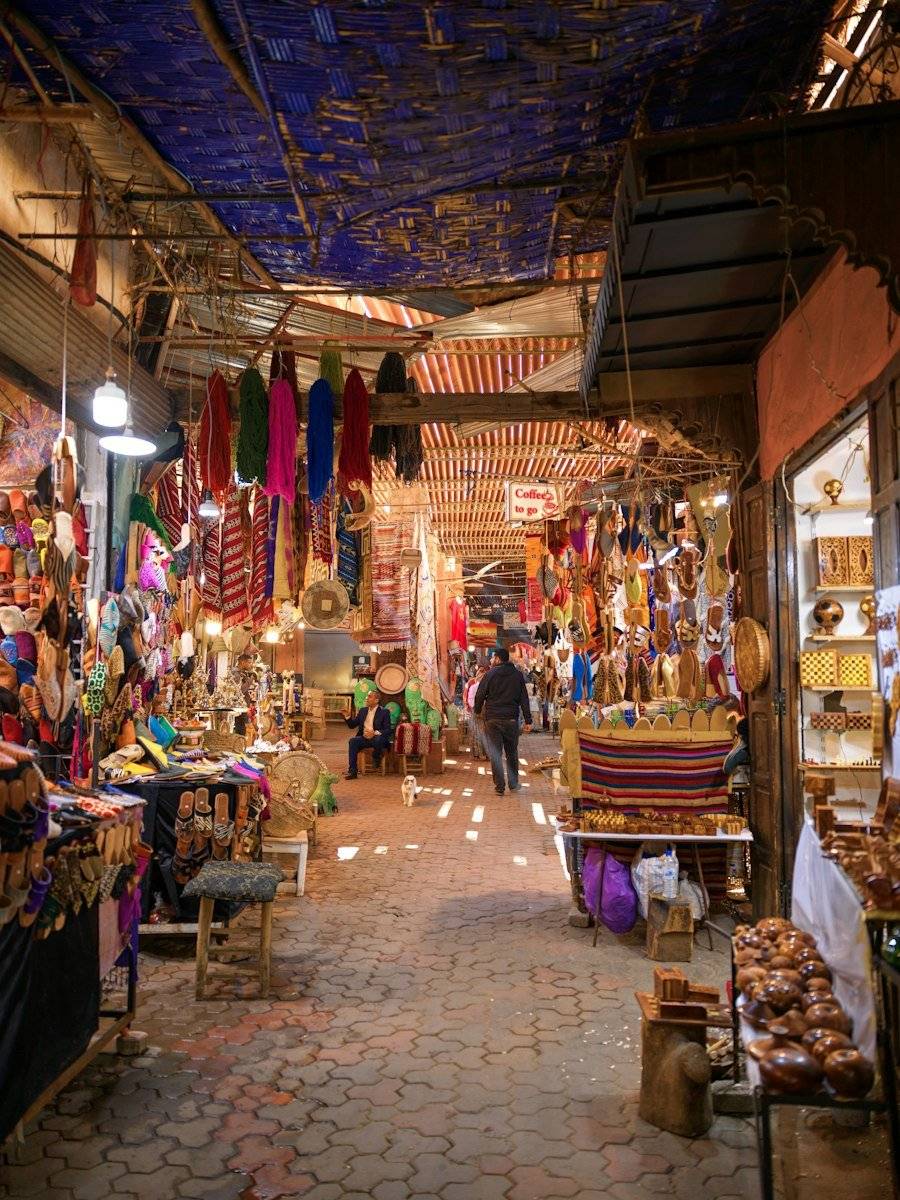
Marrakech is a walled city of red-ochre ramparts, covered lanes and one very large central square. The medina is a UNESCO World Heritage Site and the part most visitors come for. The souks lie north of Jemaa el-Fna, sorted loosely by trade: leather, spices, metalwork, carpets. The streets twist without a grid, which is why many visitors hire a guide or follow a booked tour for the first morning.
The sights that charge entry are the palaces, the madrasa and the garden. Bahia Palace and Ben Youssef Madrasa sell tickets at the door, and Jardin Majorelle needs an online ticket for a time slot. Guéliz, the new town, is a calmer break with cafés and galleries. Dress modestly with shoulders and knees covered, and agree on prices before you buy or take a taxi.
Bella Visita editorial team · Sources and editorial guidance: 19 October 2026
THE BEAUTY, ONE PLACE AT A TIME
What's worth the visit.
6 selected places
01 With guide
The Medina and souks
The walled old city, with the souks north of Jemaa el-Fna. A licensed guide helps with orientation.
The medina is a maze of covered lanes, courtyards and workshops, and its souks are grouped by trade. You will pass leatherworkers, dyers, spice stalls and metal beaters. Orientation is hard, so many visitors book a licensed guide or a tour for the first morning. Unofficial guides approach visitors on the street and often steer them to shops for a commission. Look for an official badge or book through a listed tour.
The choice, in practice. Agree the price before you start, and say no firmly to street offers to show you the way.
The main square of the medina, with performers by day and food stalls at night. Free; performers expect a tip for photos.
Jemaa el-Fna is the main square of the medina, and UNESCO recognizes its storytelling and music as intangible heritage. By day there are orange-juice stalls, storytellers and musicians. In the evening the food stalls are set up and the square fills with smoke and crowds. Walking through is free. Performers expect a tip if you take their photo, so decide before you point a camera, and check menu prices before you order.
The choice, in practice. Climb to a café terrace for a view of the square, then walk down once the crowds arrive.
A 19th-century palace of courtyards, painted ceilings and tilework. Tickets at the entrance.
The palace was built in the late 19th century for a grand vizier and expanded by his son. It has many rooms around quiet courtyards, with painted cedar ceilings, carved stucco and zellige tilework. The rooms are mostly empty, so the interest is in the decoration and the light. Tickets are sold at the entrance. It sits near the Mellah, the old Jewish quarter, and is easy to combine with it.
The choice, in practice. Go early. Tour groups arrive mid-morning and fill the narrow courtyards.
A 16th-century Islamic college, with a courtyard of carved cedar, stucco and tilework. Tickets at the entrance.
The Ben Youssef Madrasa was a school for Islamic studies and was rebuilt in the 16th century under the Saadian dynasty. Its courtyard has a central pool, carved cedar, plaster and zellige, and upstairs are the small cells where students lived. Tickets are sold on site. Check the official tourism page for current access before you go.
The choice, in practice. Spend time looking up. The carving over the doorways is the best detail.
A cobalt-blue garden created by a French painter, later owned by Yves Saint Laurent. Online tickets for a time slot.
The garden was started by the painter Jacques Majorelle in the 1920s and bought in 1980 by Yves Saint Laurent and Pierre Bergé. Its blue buildings, cactus beds, bamboo and pools make a short, shaded visit. Tickets are sold online for a time slot. Museums on the grounds may be separate, so check what your ticket covers on the official site before you pay.
The choice, in practice. Book the earliest slot for fewer people and cooler air under the bamboo.
The new town built under the French protectorate, with wide streets, cafés and galleries. Free to walk.
Guéliz was laid out in the early 20th century, with wide avenues, Art Deco buildings and a covered market. It is the calmer half of Marrakech, with cafés, galleries, restaurants and bars, and the traffic is lighter than in the medina. It is a good place to have a coffee between sights. Majorelle is on its edge, so the two are easy to combine on the same day.
The choice, in practice. Use Guéliz for a lunch break away from the souks.
Not just monuments. Three ways into its character.
01 / ANOTHER VIEW
Medina
The walled old city, with the souks, Jemaa el-Fna, most palaces and many guesthouses called riads. It is dense and loud. Plan a first morning with a guide or a booked tour, then come back on your own once you know a few landmarks.
The former Jewish quarter, near Bahia Palace, dating to the 16th century. Narrow streets, a spice market and the Lazama Synagogue are here. A guide can explain the history, and the area deserves a quiet, respectful visit rather than a quick photo stop.
The new town, a short taxi ride from the medina. Broader streets, galleries, cafés and shops, plus Jardin Majorelle on its edge. It makes a good change of pace after the souks and a calm place to eat in the evening.
Jemaa el-Fna, Guéliz. Walks don't include the interiors of attractions.
Choose your entry.
Bahia Palace, Ben Youssef Madrasa, Jardin Majorelle. Check the date, the time and the areas included in the option you choose.
Give places context.
The Medina and souks. A guide can make the difference if you want to connect what you see to history. Compare language and inclusions before booking.
A detail that helps. Book Jardin Majorelle online for a time slot. Bahia Palace and Ben Youssef Madrasa sell tickets on site.
Start the medina with a licensed guide or a booked tour, and agree on the price in advance.
Dress modestly with shoulders and knees covered. It is respectful and also avoids unwanted attention.
Carry small bills for tips and small purchases, and agree on a taxi fare before you get in or ask for the meter.
QUESTIONS TO ASK FIRST
Inside Marrakech, with a clear head.
What should I book in advance in Marrakech?+
Book Jardin Majorelle online for a time slot before you travel. Bahia Palace and Ben Youssef Madrasa sell tickets on site. For the medina, a licensed guide or a booked walking tour is worth arranging for your first morning. Jemaa el-Fna, the souks and Guéliz are free to walk.
Do I need a guide in the medina?+
You can walk without one, but it is easy to get lost. A licensed guide or a booked tour with a guide in English helps with orientation and explains the souks. Use the Civitatis listings below, and avoid street offers from unofficial guides, who often take visitors to shops for a commission.
How do I avoid unofficial guides?+
Say no firmly and keep walking, or ask where the person is taking you. Official guides carry an identification badge, and booked tours name the guide and the meeting point. If you want help finding your way, ask a shopkeeper or a café for directions.
Do I have to pay the performers on Jemaa el-Fna?+
Performers expect a tip if you take their photo or stop to watch, so decide before you point a camera. You can enjoy the square for free from the edges or from a café terrace. Check prices before you order at the food stalls.
CURIOSITY DESERVES CLEAR SOURCES
Where the information comes from.
Each place links to its own source. The text separates editorial guidance from conditions to reconfirm for your date.